I asked ChatGPT to Identify:
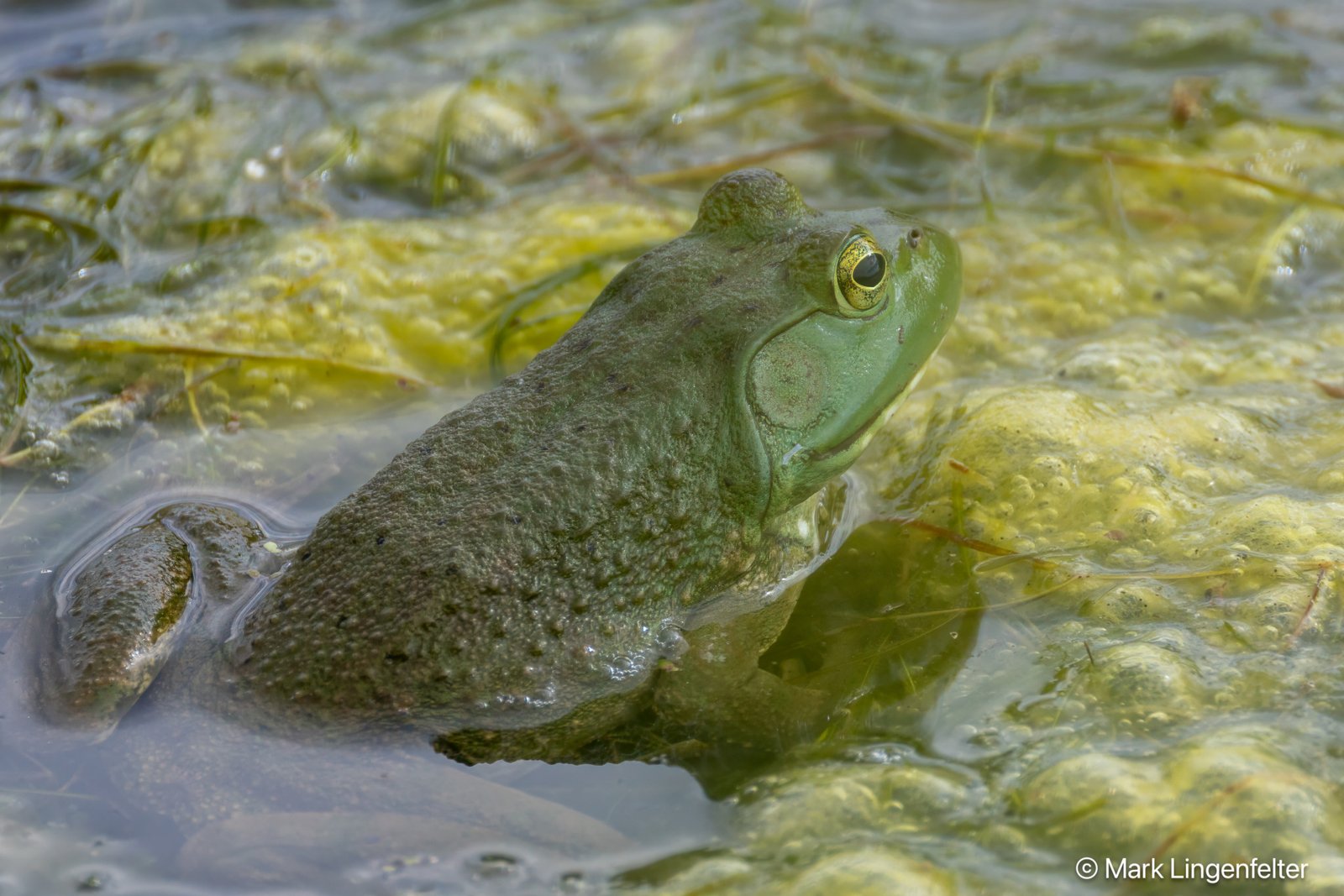
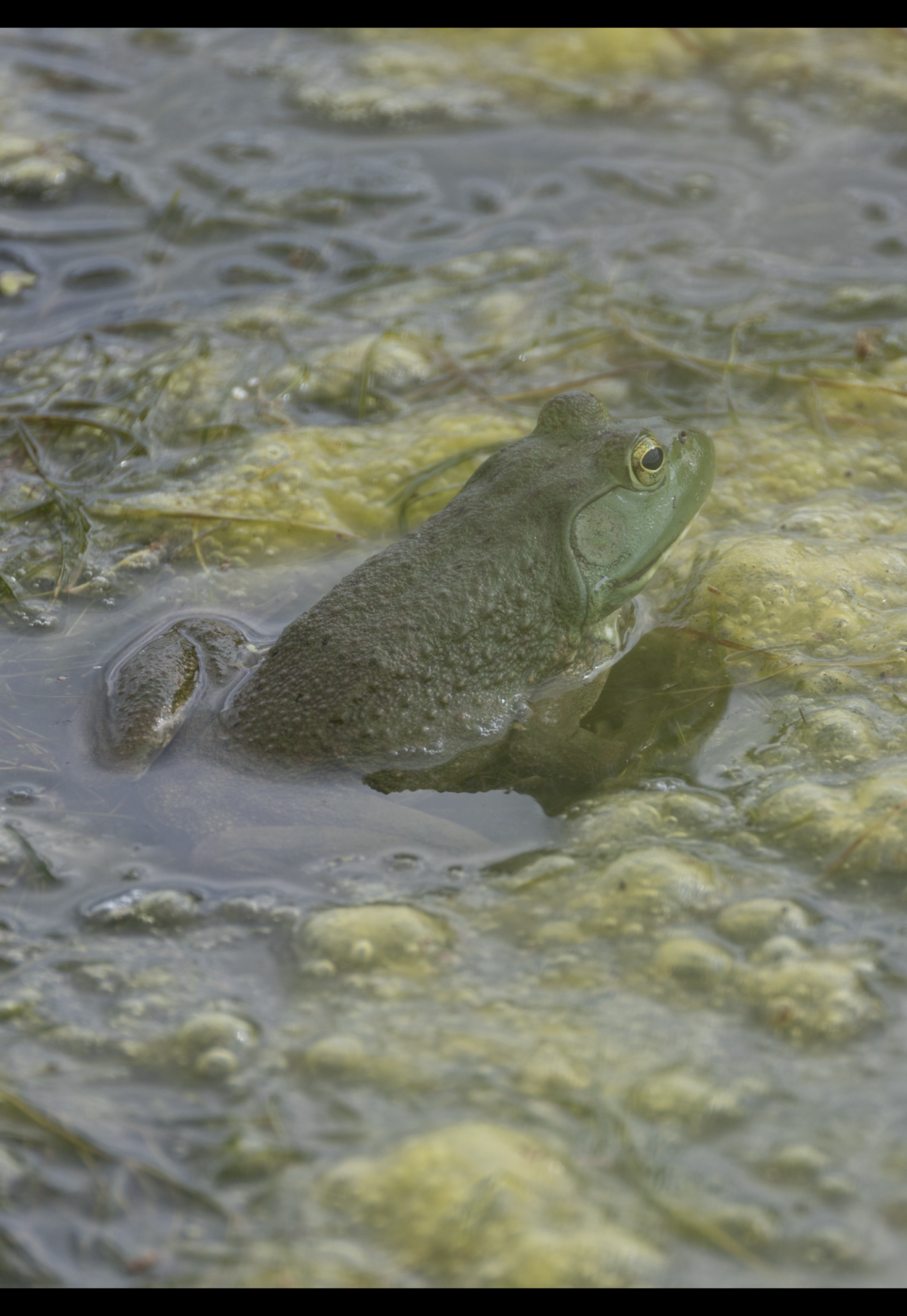
This appears to be an American Bullfrog (American Bullfrog), likely an adult.
Key features visible in your photo:
- Large size and robust body
- Green face and tympanum (eardrum) behind the eye
- No prominent dorsolateral ridges (raised folds running down the back), which helps distinguish it from Green Frogs
- Rough, mottled olive-brown back
- The large circular eardrum behind the eye is characteristic of bullfrogs
The photo may show a male, as the tympanum appears quite large relative to the eye. In bullfrogs, males typically have tympana larger than their eyes, while females’ tympana are about the same size.
Nebraska fits very well with American Bullfrog (American Bullfrog), which is widespread throughout the state in ponds, lakes, marshes, and slow-moving streams.
Looking more closely at your photo:
- The large tympanum (eardrum) behind the eye is prominent.
- The frog lacks the long dorsolateral ridges that would extend down the back on a Green Frog.
- The broad head and heavy body shape are classic bullfrog characteristics.
- The green face contrasting with a darker olive-brown back is also typical.
One interesting detail is the foam and water around the frog. Bullfrogs often sit partially submerged like this during the breeding season, and males may remain near egg masses or breeding areas.
I’m about 90–95% confident this is an American Bullfrog.
For context, the other large Nebraska frogs it might be confused with are:
- Green Frog — usually shows distinct dorsolateral ridges.
- Northern Leopard Frog — has obvious dark spots with light borders.
- Plains Leopard Frog — also heavily spotted.
Your frog lacks the spotting pattern of leopard frogs and the ridges of a green frog, which strongly points to a bullfrog.
A rough estimate from the proportions in the image is that this individual may be 6–8 inches (15–20 cm) long, making it a fairly large adult.








Be the first one to comment!