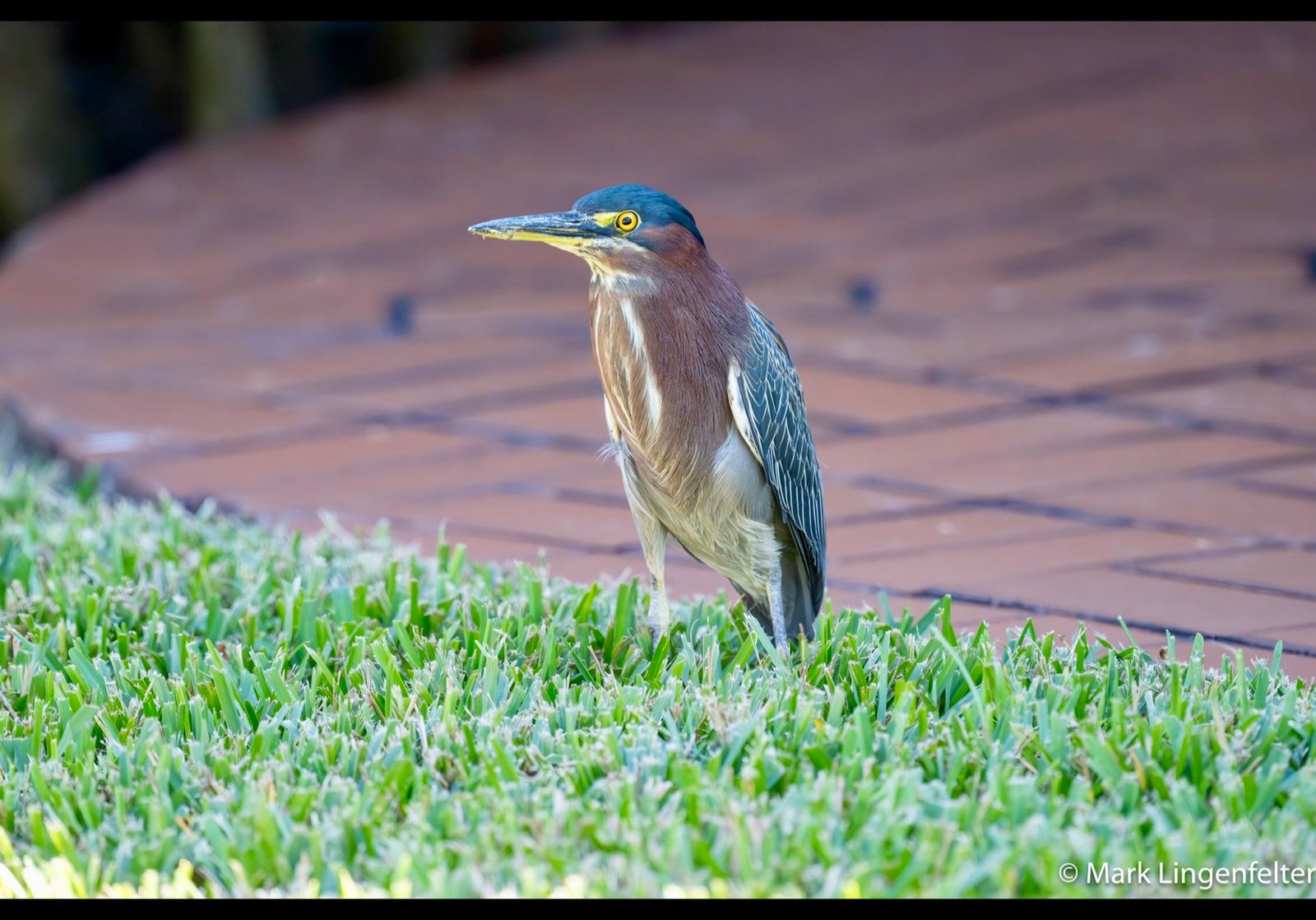
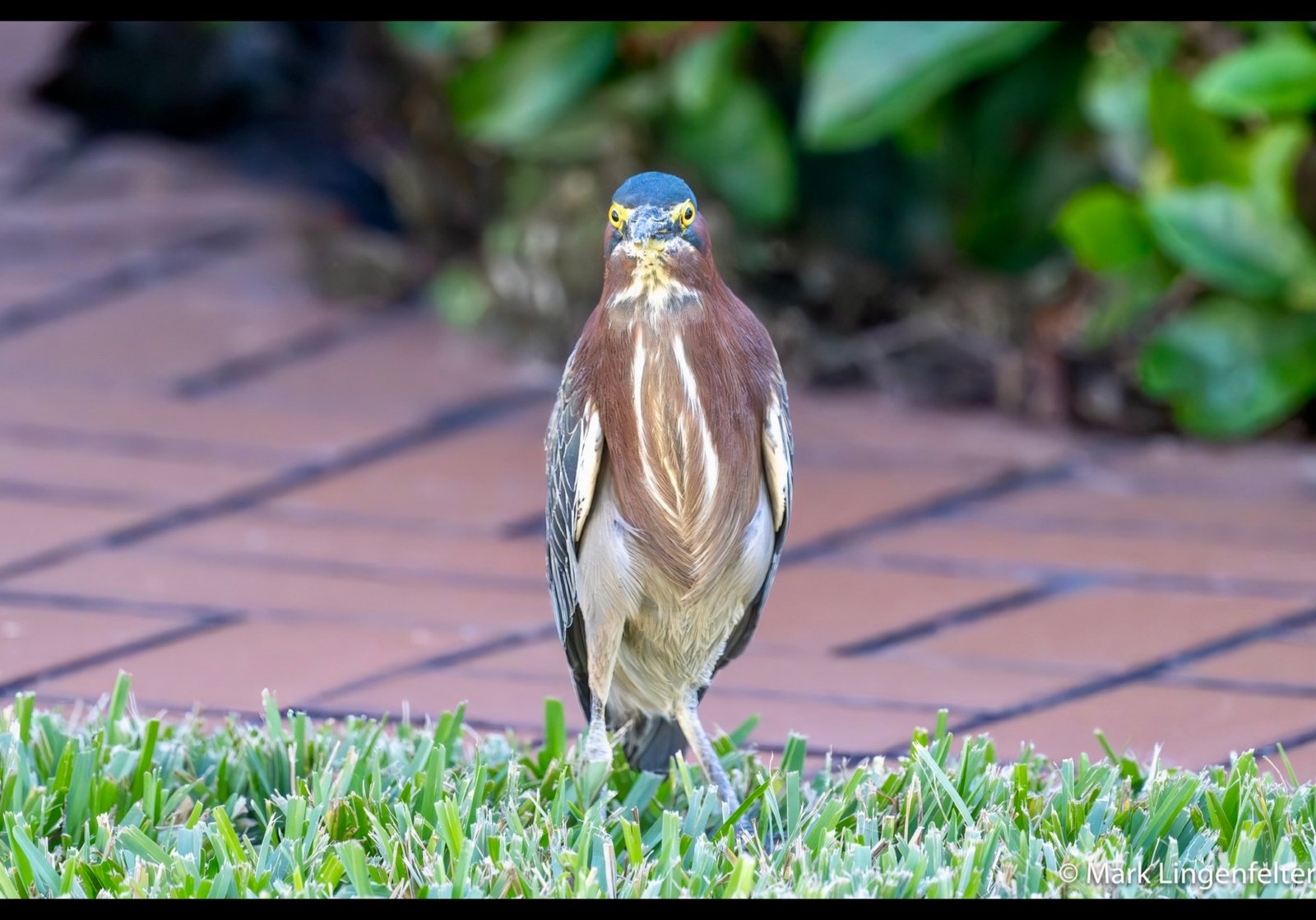
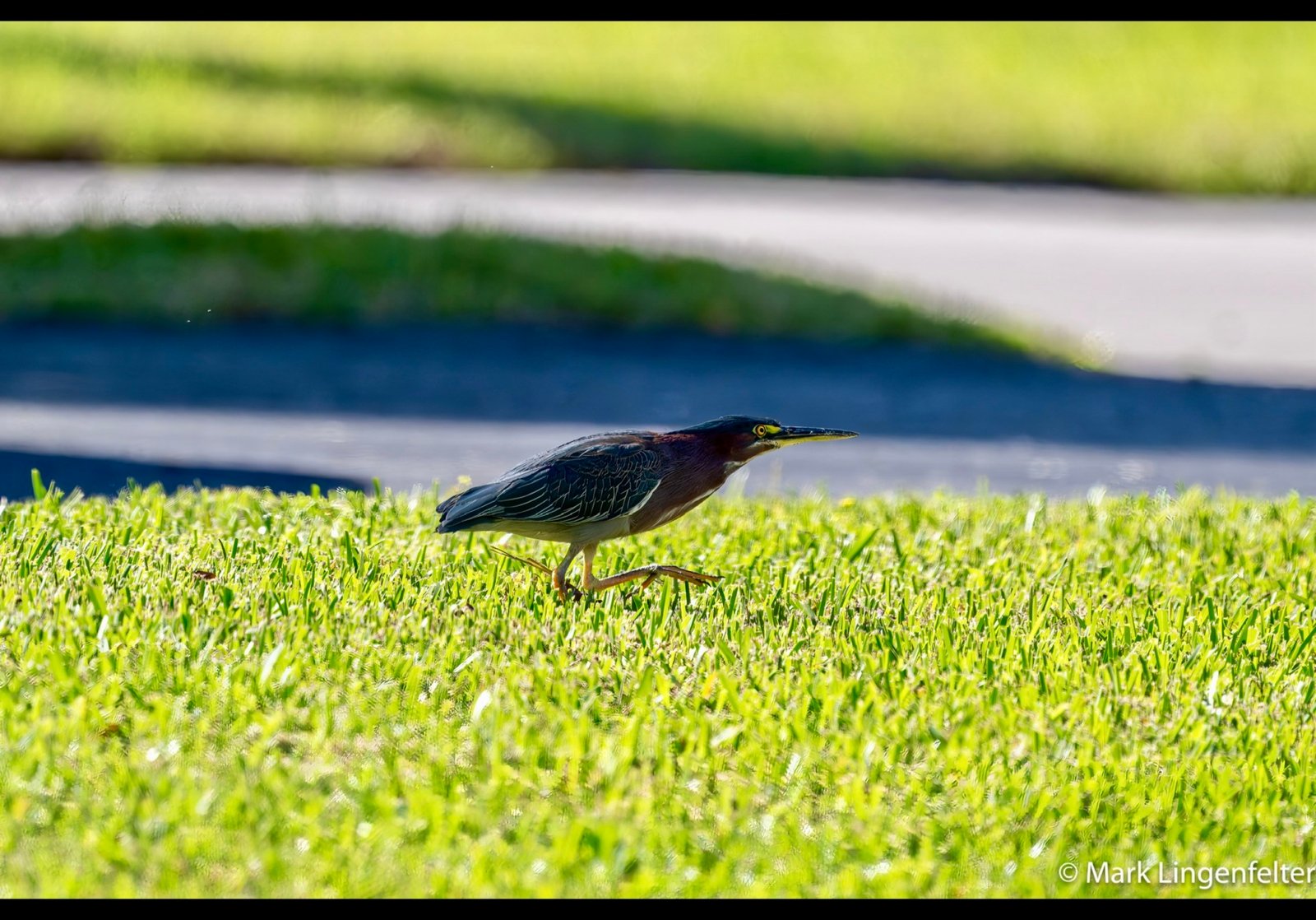
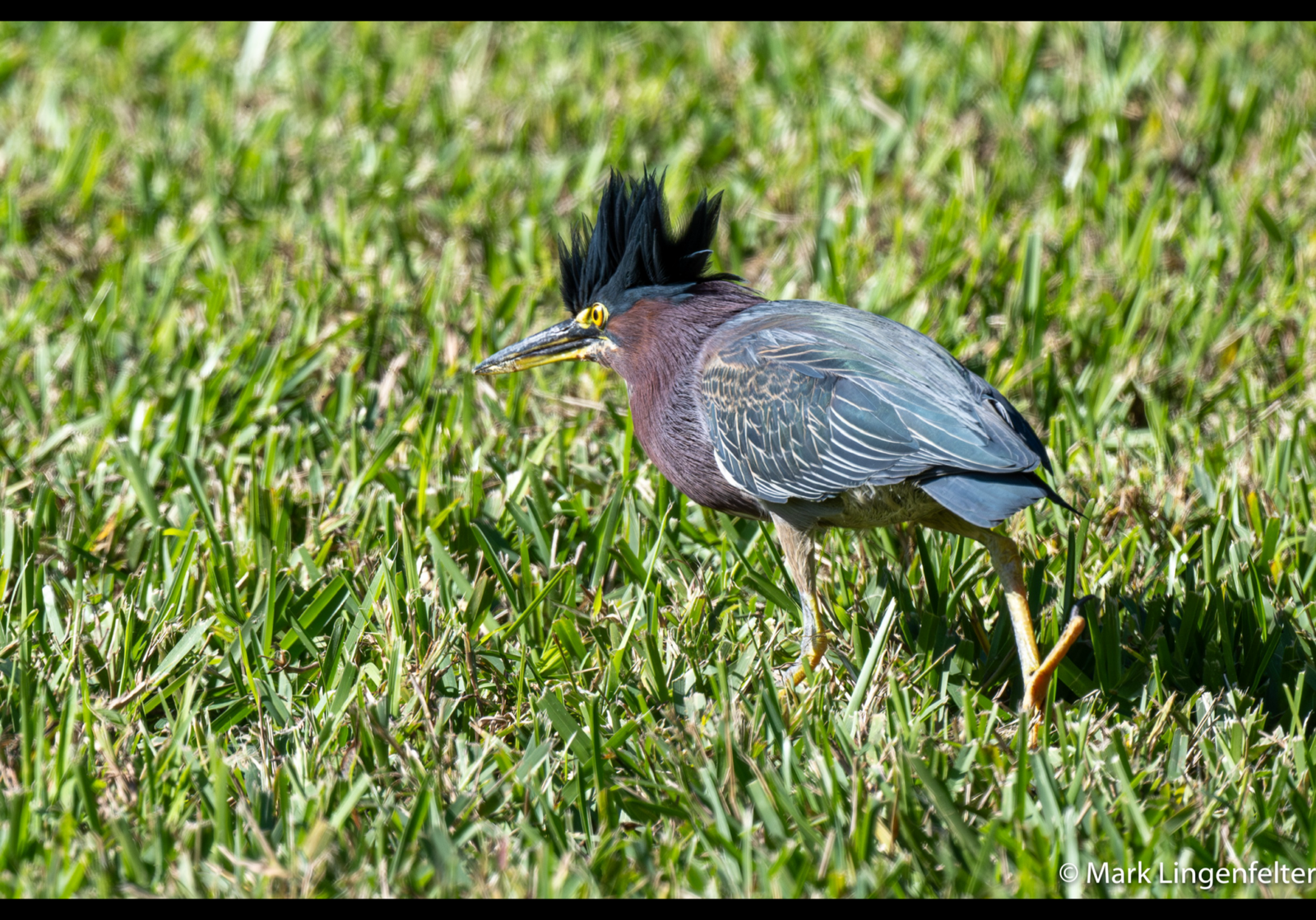
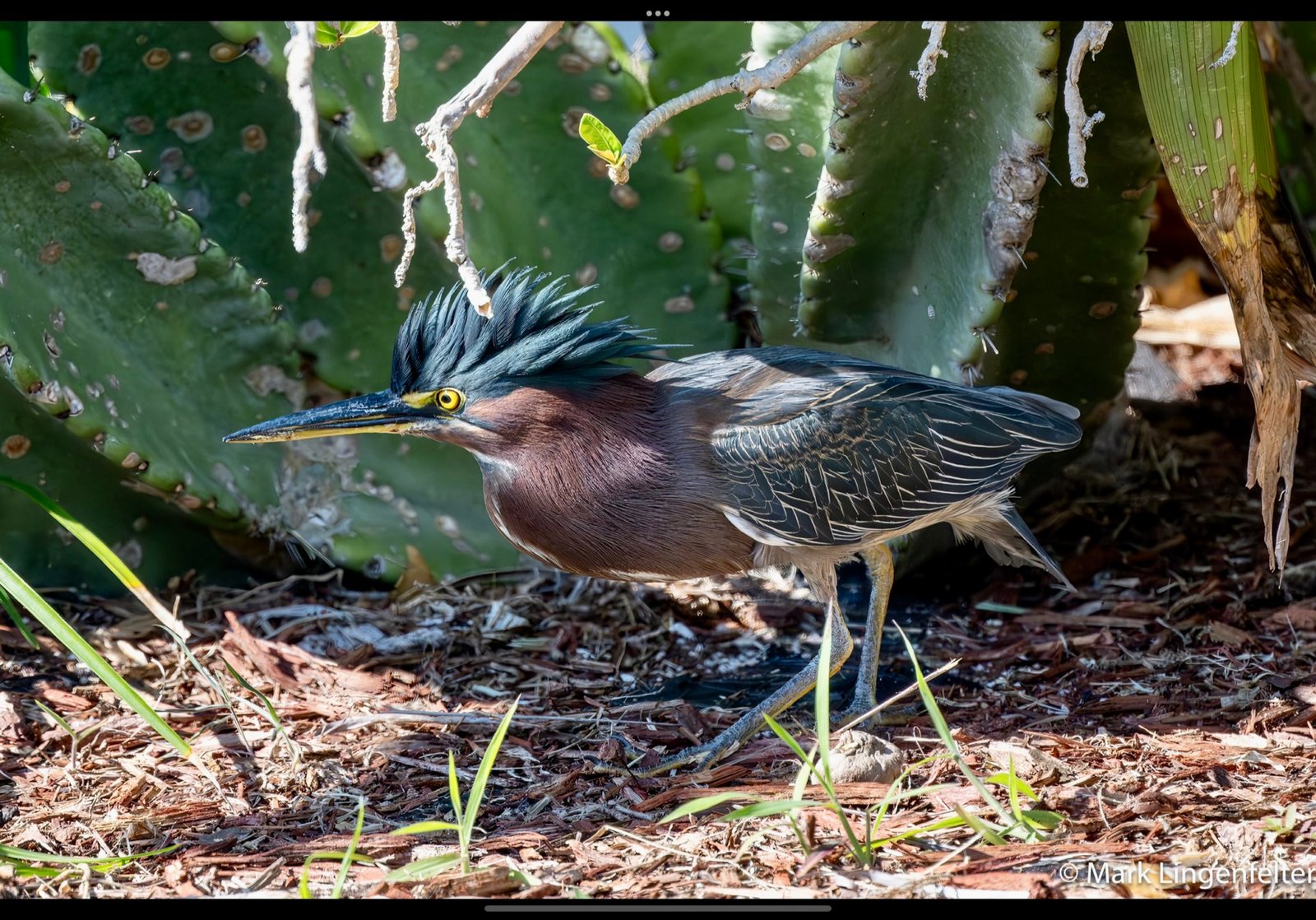
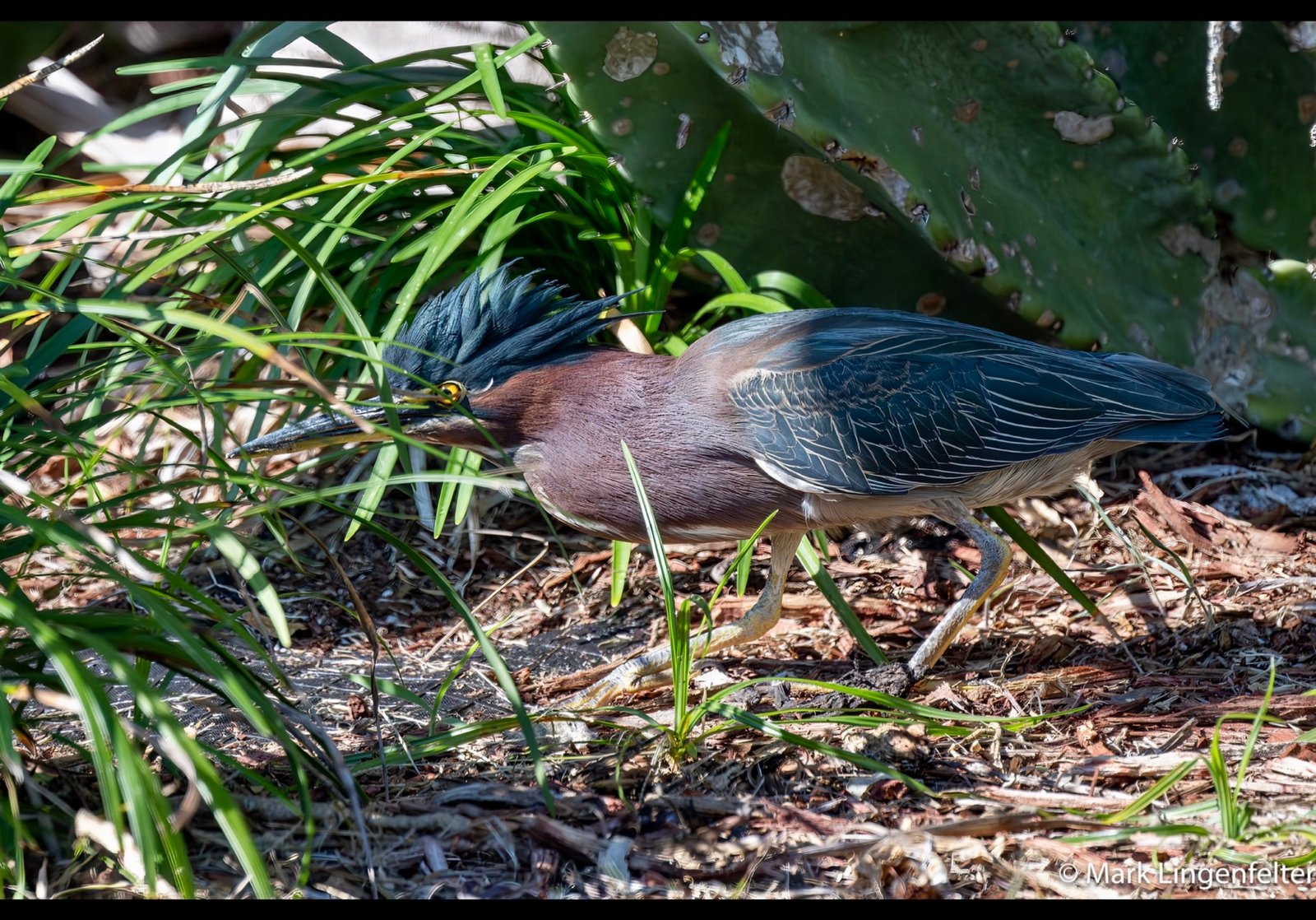
The green heron is relatively small; adult body length is about 44 cm (17 in). The neck is often pulled in tight against the body. Adults have a glossy, greenish-black cap, a greenish back and wings that are grey-black grading into green or blue, a chestnut neck with a white line down the front, grey underparts and short yellow legs. The bill is dark with a long, sharp point. Female adults tend to be smaller than males, and have duller and lighter plumage, particularly in the breeding season.
The Green Heron is one of the world’s few tool-using bird species. It often creates fishing lures with bread crusts, insects, and feathers, dropping them on the surface of the water to entice small fish.
Backyard Sandhill Cranes in Wisconsin
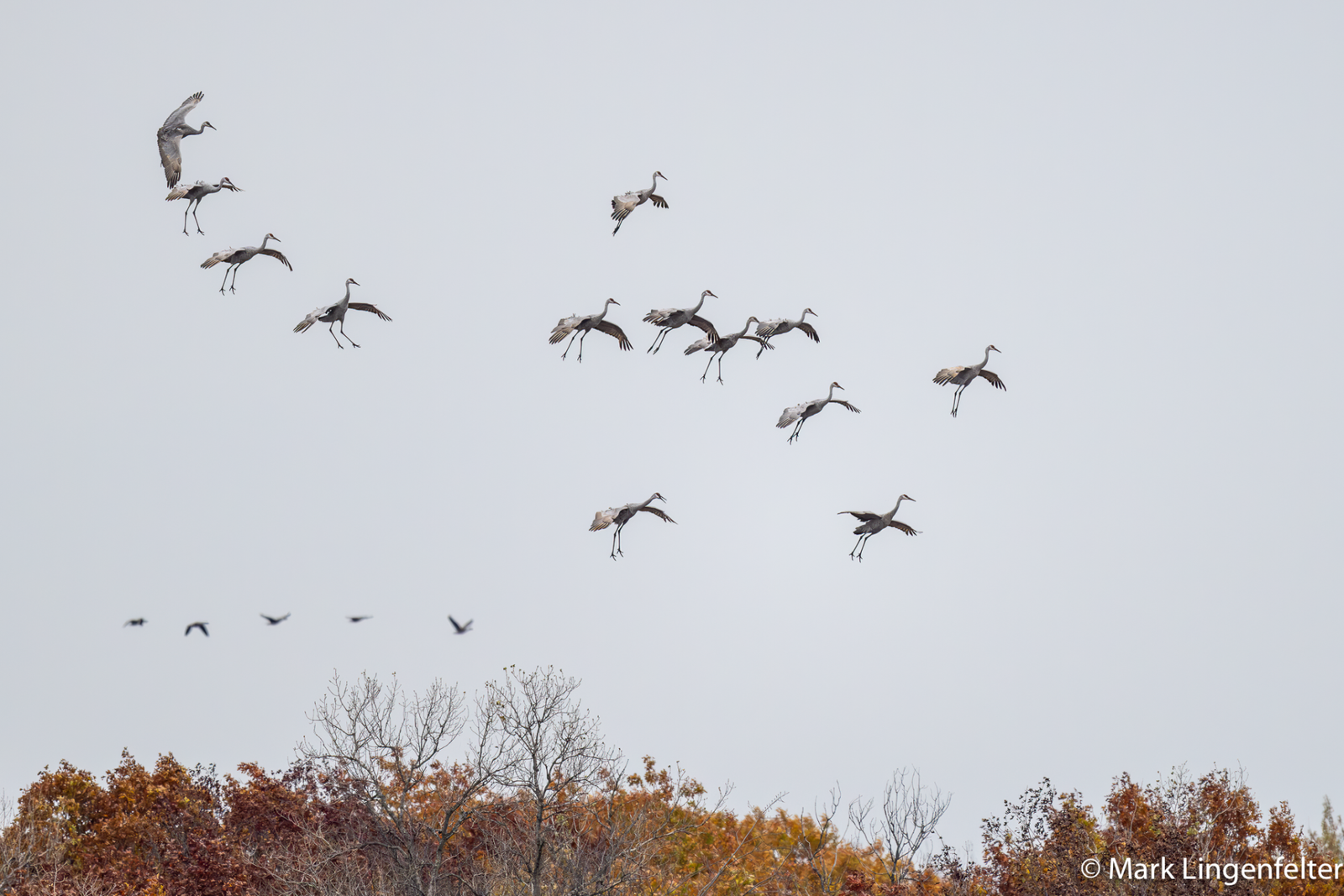
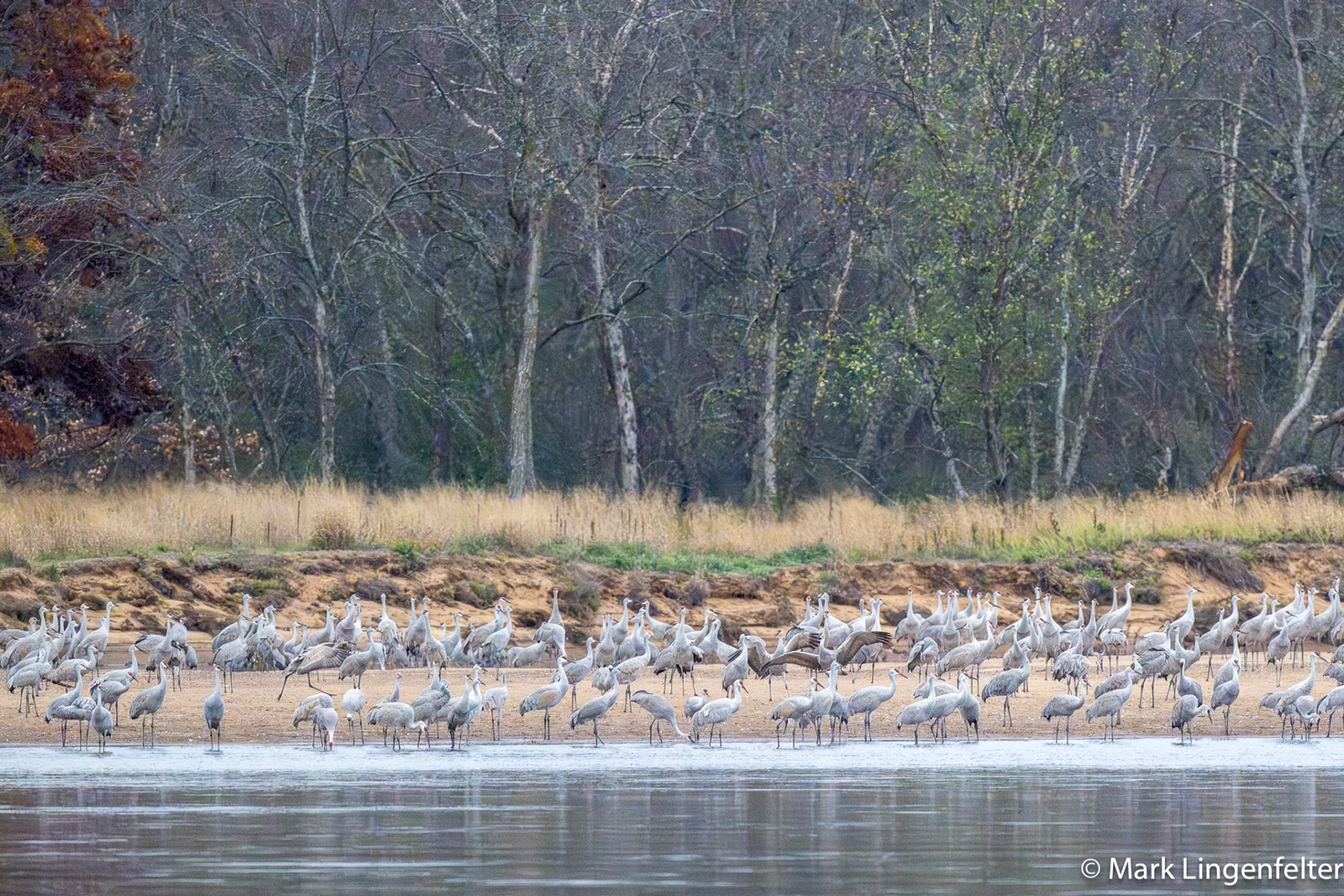
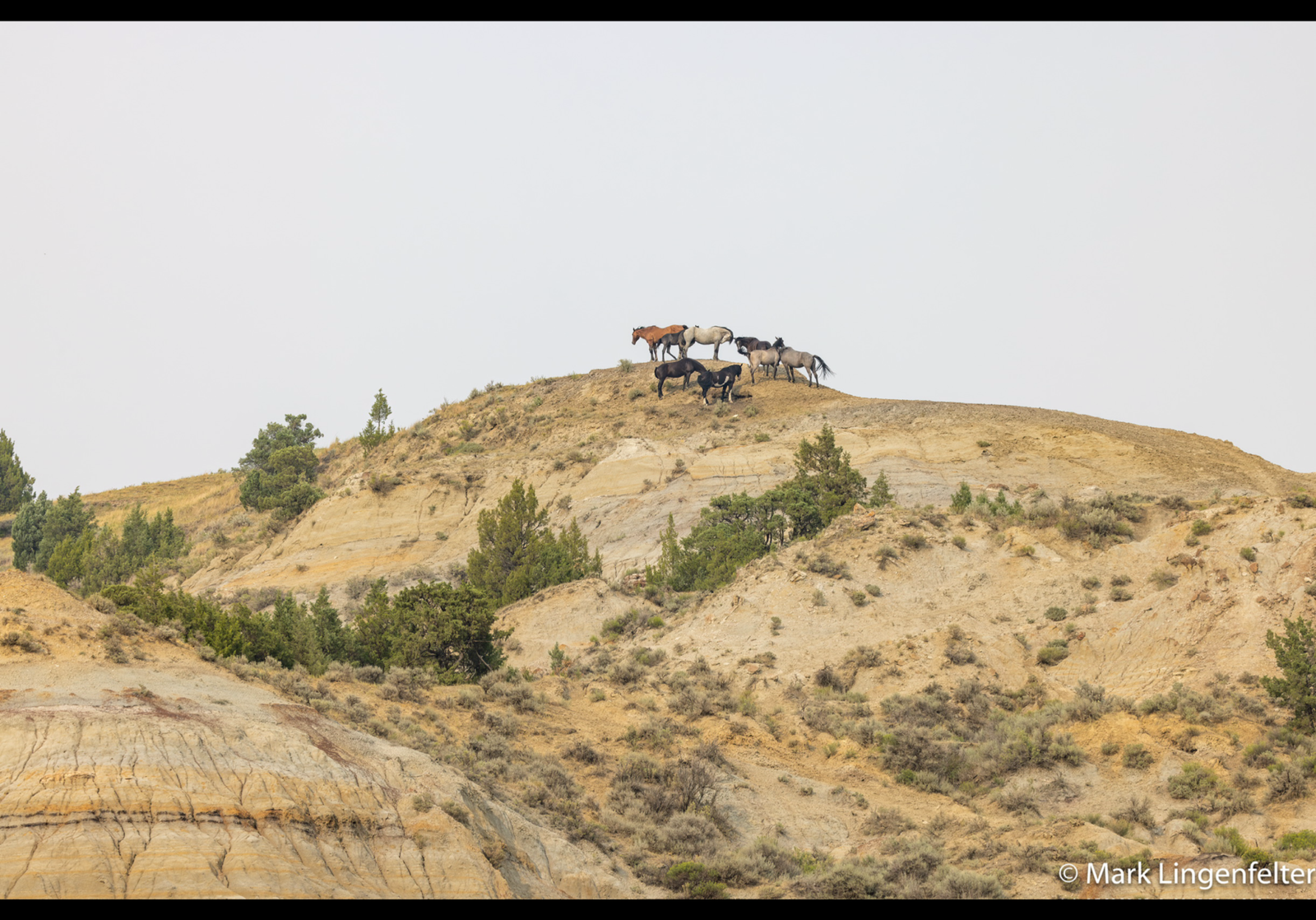
The sandhill crane (Antigone canadensis) is a species of large crane of North America and extreme northeastern Siberia. The common name of this bird refers to habitat like that at the Platte River, on the edge of Nebraska‘s Sandhills on the American Great Plains. Sandhill Cranes are known to hang out at the edges of bodies of water, especially in the Central Florida region. The central Platte River valley in Nebraska is the most important stopover area.
https://marklingenfelter.net/wp-admin/post.php?post=1303&action=edit#
Backyard Pileated Woodpecker in Wisconsin
Is that a Wood Duck in Our Wood Duck House?
Leucistic Common Grackle noted by Our Dog Zoe
This phenomenon is known as leucism, the partial loss of all types of pigmentation, including carotenoids. Leucism causes white coloration, white patches, spots, or splotches on the skin or fur. Leucism is also discernible from albinism because leucism does not affect the pigment cells in the eyes.
Eastern Kingbird and Tree Swallows
Nikon Z9 with Z800 pf Handheld
Killdeer Nesting and Chicks 2023
Photos with Nikon Z9 and Nikkor Z 800 f/6.3 Lens
Rhine River Cruise 2023
Common Yellowthroat
Palm Club Birds November 2022
Yellow-crowned Night Heron spotted last night – so dark they think no one can see them and unless you spot them fly, you usually don’t notice that they are near. The camera makes it look like it is daytime when in fact around 9:30 PM. We only knew he was near because we saw him fly by a streetlight. This was taken with 1 second exposure, hand held, ISO 12800, 100mm telephoto lens.


Be the first one to comment!